
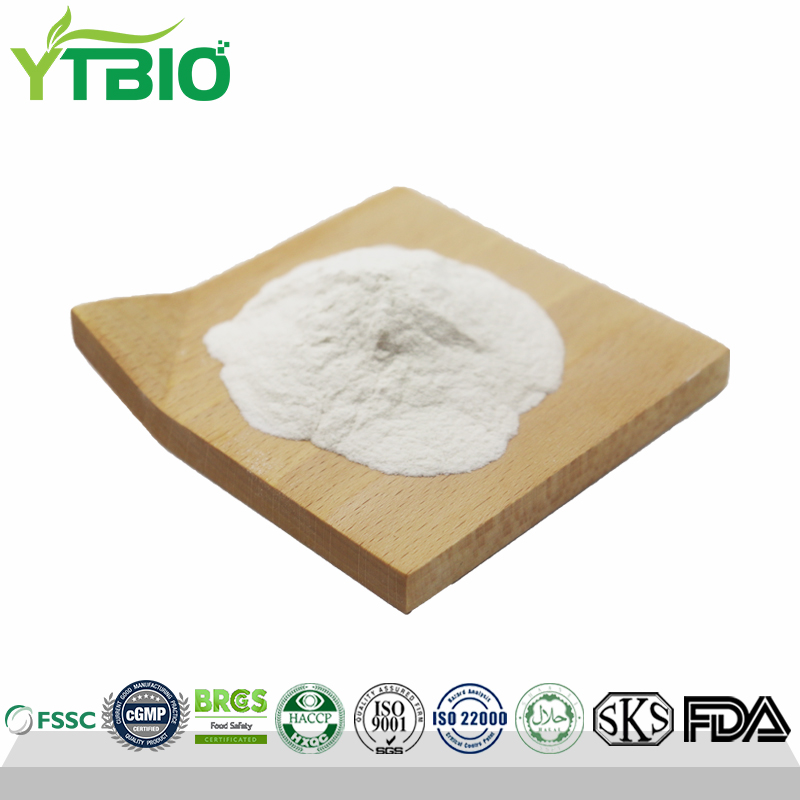
Scleroglucan Powder CAS 39464-87-4
What is scleroglucan?
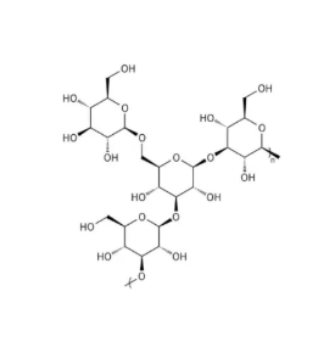
Scleroglucan is a nonionic, homogeneous polysaccharide polymer secreted by the fungus Sclerotium, belonging to the category of microbial polysaccharides. Its chemical composition, consisting of 1,2-hexanediol, ethylhexylglycerol, and water, offers strong water-retention and stability, and exhibits excellent tolerance to temperature, pH, electrolytes, and shear stress.
Scleroglucan has applications in skincare, oil extraction, food processing, medicine, and agriculture. In cosmetics, it can enhance the skin barrier function and in the oil industry, it can serve as an oil-displacing agent to replace xanthan gum. Industrial production is achieved through optimized fermentation conditions for Sclerotium. For example, a constant-rate fed-batch strategy can increase yields to 32.62 g/L. The technology for large-scale production has reached mass production stage.
Skin Benefits of scleroglucan
Moisturizing
It forms a moisturizing film on the skin's surface, effectively locking in moisture and preventing moisture loss. It deeply moisturizes the skin, leaving it hydrated and smooth, and delaying the effects of aging.
Skin Repair
It promotes keratinocyte proliferation, repairs the skin barrier, and strengthens the skin's ability to resist external stimuli (such as sudden cold and heat, pollen, and dust). It reduces inflammation and stinging sensations.
Soothing Sensitivity
It is mild and compatible with skin, making it suitable for sensitive skin. It can reduce symptoms such as redness and itching, providing a comfortable feel.
Antioxidant
It scavenges free radicals, reducing free radical damage to skin cells, delaying skin aging, and maintaining a youthful appearance.
Regulating Skin Feel
It provides a silky, moisturizing feel, gliding on like a lotion without a sticky feel. It forms a thin film on the skin's surface, reducing roughness.

Applications of Scleroglucan
Industrial Field
Oilfield Additives: Used in drilling fluids or fracturing fluids, leveraging its high viscosity to optimize fluid properties, stabilize wellbore walls, or carry cuttings. The recommended dosage range is 1%-5% of the drilling fluid weight, subject to optimization based on formation conditions.
Paper Industry: Used as a thickener or binder to improve paper strength and surface properties. The recommended dosage range is 0.5%-3% of the substrate weight, subject to adjustment based on pulp type and process.
Chemical Industry
Polymer Material Preparation: Used as a raw material or additive in the synthesis of biomaterials such as dextran gels and microspheres. The recommended dosage range is 2%-10% of the total reactant weight, subject to adjustment based on the reaction system.
Surfactants/Gelling Agents: Participate in specific chemical reactions or material processing, such as as carriers or templates for nanomaterials. The recommended dosage range is 1%-5% of the total reactant weight, subject to adjustment based on carrier design.
Textile Industry
Sizing and Finishing: Used as a finishing agent or sizing agent to improve the gloss, strength, or feel of fabrics. The recommended range is 0.5%-2% of the polymer weight (for addition to spinning dope), or adjusted based on dye type and process (as a dyeing auxiliary, typically 0.1%-1%).
Dyeing Process: It serves as an auxiliary component for dye dispersion or fixation, optimizing dyeing results. Adjustments are made based on the textile type and process requirements. For example, in silk dyeing, a 1%-1.5% addition may be used.
Food Additive
As a natural thickener, stabilizer, and emulsifier, it is widely used in food processing, such as in jellies, jams, beverages, ice cream, and cheese.
Pharmaceutical
It is widely used in the pharmaceutical industry as a pharmaceutical colloid in the production of oral capsules, emulsions, and injectables.
Cosmetic Additive
As a natural thickener and emulsifier, sclerotium gum is widely used in cosmetics manufacturing, such as face creams, shampoos, conditioners, body washes, and toothpaste.
Feed Additive
As a natural thickener and binder, it is widely used in feed, such as in feed pellets and feed additives.
