
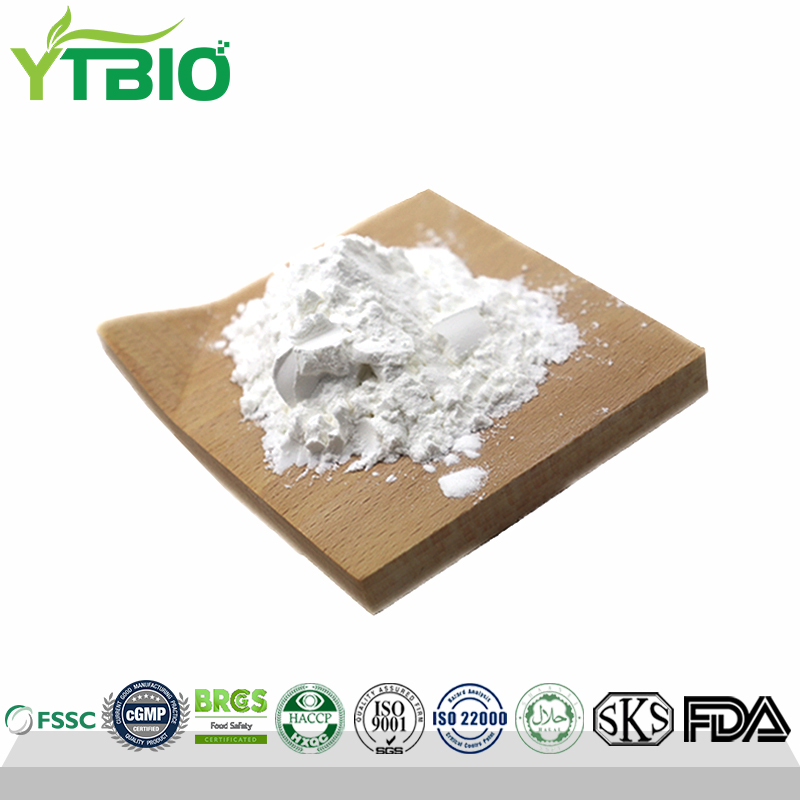
99% Thymol Powder CAS 89-83-8
Do You Know About Pure Thymol?
Thymol is a monoterpenoid phenolic compound naturally found in plants such as thyme and oregano. Its chemical name is 2-isopropyl-5-methylphenol. This compound possesses various biological activities, including antibacterial, antioxidant, and insecticidal properties, and is therefore widely used in fragrances, food, medicine, and pesticides. Initially, thymol was isolated from thyme, hence its name; currently, the commercially available form is mainly synthetic thymol.
Details on Thymol
1. Physical Properties
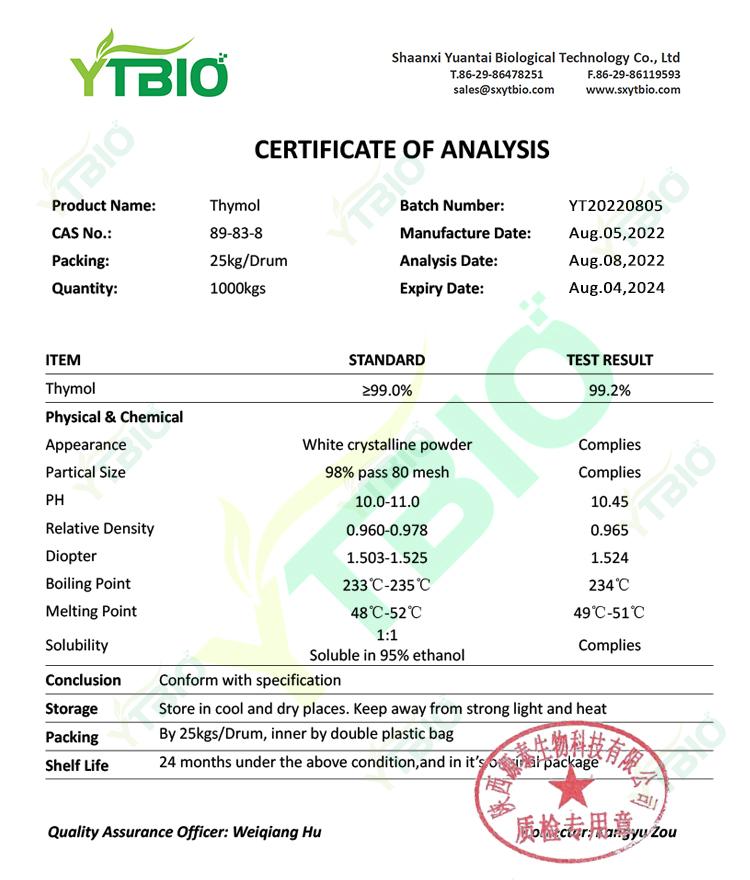
At room temperature, it appears as colorless crystals or crystalline powder with a characteristic thyme or thyme aroma. Its melting point is approximately 48–51.5°C, its boiling point is approximately 232–233°C, and its density is approximately 0.9699 g/cm³ (at 20°C). This compound is slightly soluble in water and readily soluble in organic solvents such as ethanol, ether, glacial acetic acid, and chloroform.
2. Sources and Preparation
In terms of natural sources, thymol is mainly found in the seeds or essential oils of plants in the Lamiaceae family (such as thyme, thyme, and oregano). Due to resource limitations in natural extraction, industrial production currently mainly relies on artificial synthesis methods, such as Friedel-Crafts alkylation (isopropylation) of m-cresol and isopropanol, to meet the needs of large-scale applications.
YTBIO: Providing High-Quality Pure Thymol and Services
Thymol: Diverse Biological Activities
Antibacterial and Anti-inflammatory: It exhibits significant inhibitory effects against both Gram-positive bacteria (such as Staphylococcus aureus) and Gram-negative bacteria (such as Escherichia coli). Its antibacterial mechanism primarily involves disrupting the permeability of bacterial cell membranes. It also effectively inhibits the release of inflammatory mediators, thereby alleviating inflammatory reactions such as redness, swelling, and pain.
Anthelmintic and Insecticide: It exhibits biological activity against a variety of pests, both repelling and killing agricultural pests such as mites and nematodes. It also paralyzes and expels intestinal parasites, causing them to detach from the host's intestinal wall and be excreted in feces.
Antioxidant: It can effectively scavenge free radicals in the body and reduce cellular damage caused by oxidative stress, providing a foundation for preventing related chronic diseases.
Neuroprotective: Studies have shown that thymol has protective potential in models of neurodegenerative diseases such as Parkinson's disease and Alzheimer's disease. Its effects may be related to regulating antioxidant, anti-inflammatory, and specific neural signaling pathways.
Local Anesthetic: Thymol has local anesthetic and analgesic effects on the skin and mucous membranes. Its mechanism involves blocking the transmission of nerve impulses, thereby temporarily relieving local pain.
Applications of Thymol
Medicine and Oral Care
In oral care products (such as toothpaste and mouthwash), Thymol is used as an active ingredient to inhibit oral pathogens, prevent caries and gingivitis, and freshen breath. It is also used for disinfection during dental procedures and to treat dentin hypersensitivity.
In dermatology, it is commonly used in the formulation of topical preparations (such as ointments and lotions) to treat fungal infections (such as tinea pedis and tinea corporis) and to relieve eczema and itchy skin.
Food Industry
As a natural food preservative and antioxidant, it effectively inhibits microbial growth, delays food spoilage, and thus extends shelf life.
It is also an edible flavoring agent, widely used in candies, chewing gum, and frozen drinks to provide a unique aroma.
Daily Chemicals and Fragrance Industry
It is one of the important raw materials in fragrance formulation, giving perfumes, air fresheners, detergents, and other products a fresh, natural herbal scent.
In cosmetics and personal care products (such as skincare products, soaps, and shampoos), it plays multiple roles as a fragrance, antibacterial agent, and anti-inflammatory agent.
Agriculture and Plant Protection
As a plant-derived natural insecticide and fungicide, it is used to control crop pests and plant diseases, meeting the needs of green agriculture development.

